

|
|
|
|
|
VOLUME 26 • CHAPTER 4 • October 2026MemoirsThe first Campionette, the student newsletter, was published 109 years ago, on November 11, 1917. The first editor of the Campionette was Tom O'Connor, class of 1920. The last official issue was the one announcing the closing of the school in May 1975. Over the years, various classes have published special editions for their class reunions, some of which have been pretty extravagant.
Celebrating 26 Years!The Campion Forever Newsletter was first published by Aaron Huguenard, class of 1947, in December 2000 in the Inprivatum Campianum at Campion-Knights.org as a means for alumni and faculty to keep in touch and share life experiences. CampionForever.org began in October 2001. Tom Olson '72 became editor and publisher in July 2010 at the behest of Aaron prior to his passing. We've been trying to get memoirs from retired and not-so-retired Campion Jebbies for our newsletter for quite some time. We don't care if the memoirs are about when they went to Campion, taught at Campion, or just what they've done since leaving Campion. We just want to hear something from our mentors in the first person; perhaps words of wisdom learned while IHS; typically, we only get third-person accounts post mortem. Not to lay all the blame on the Jebbies, but why can't we get memoirs from more alumni, or what they've done since leaving Campion? Where are all those other authors and editors of the old 'ette"? While it has been a task getting people to submit articles, there are a few dedicated alumni and Jebbies who do regularly provide ideas for articles. This is a good thing; otherwise, I would have to conjure the 'Ghost of Joe Campion' for ideas more than I care to.
In mid September 2026 I was getting worried that I woulnd't have any articles for the October 2026 edition. So, I put out a call for articles to everyone on our email lists hoping I would get some new writers volunteering their talent. I received a dozen in the first week. Hopefully, they will keep rolling in for the January 2027 edition. The Future Looks Bright From Mark Monoscalco '74
Ritus Transitus: My Rite of PassageWhen I arrived on campus in September of 1970, I felt as though I had been released from juvenile detention. I grew up in an extended family, and home life was filled with many older relatives. At home and at most social events, I was the youngest person in the room. I was constantly under close supervision. Although I have many happy memories of family life, I was burdened by constant intervention into my daily affairs. Campion gave me the opportunity to make my own decisions and mistakes. I finally felt like an independent actor. I remember discussing these feelings with our freshman classmate Mark Feldman, and when I said to him, “Campion is the best that I’ve ever had it,” he seemed shocked, but I assume, out of courtesy (or sympathy), did not say anything negative. Growing up in my extended family instilled in me a desire for independence and self-reliance. I cherish being left alone. I feel a strong sense of accomplishment and satisfaction when I can identify a problem, solve it, and complete a project on my own. My love of independence carried over into my political philosophy. I never wanted to change the world; I just wanted to be left alone. For most of my life, I would say during social gatherings: “Let’s not talk about politics or religion.” I reached a point where I realized avoiding political discussions wasn't making the world a better place (at least for me). I was also getting angrier and more frustrated listening to political and economic commentary. I could respond with sound bites and bumper sticker slogans, but I didn't have enough depth of knowledge to make a persuasive argument. I decided that I should learn about political philosophy and economics. I began reading books and internet blogs. Later, I began listening to podcasts as well. Eventually, I noticed I wasn't getting angry when I heard a political discussion or economic statement I disagreed with. Instead of getting angry, I began thinking about the underlying assumptions and principles involved. Even if I didn't enter the discussion, thinking about the fundamentals I had studied gave me inner peace. Five years ago, I decided to share this learning experience with my friends. I began researching and writing a book. After four years of effort, I published The Forbidden Idea: Hidden Truths About Individual Liberty, Economic Freedom, Political Philosophy, and History. I am very happy with the result. My goal was to write a concise and accessible book explaining the fundamental philosophy and history of individual liberty. I knew that I had accomplished something special when Dr. Ron Paul agreed to write the foreword. I hope you find the book interesting. The independence I discovered at Campion eventually set me on the path to writing this book. I could never have predicted that outcome back in 1970. For more information, visit this website: www.theforbiddenidea.com 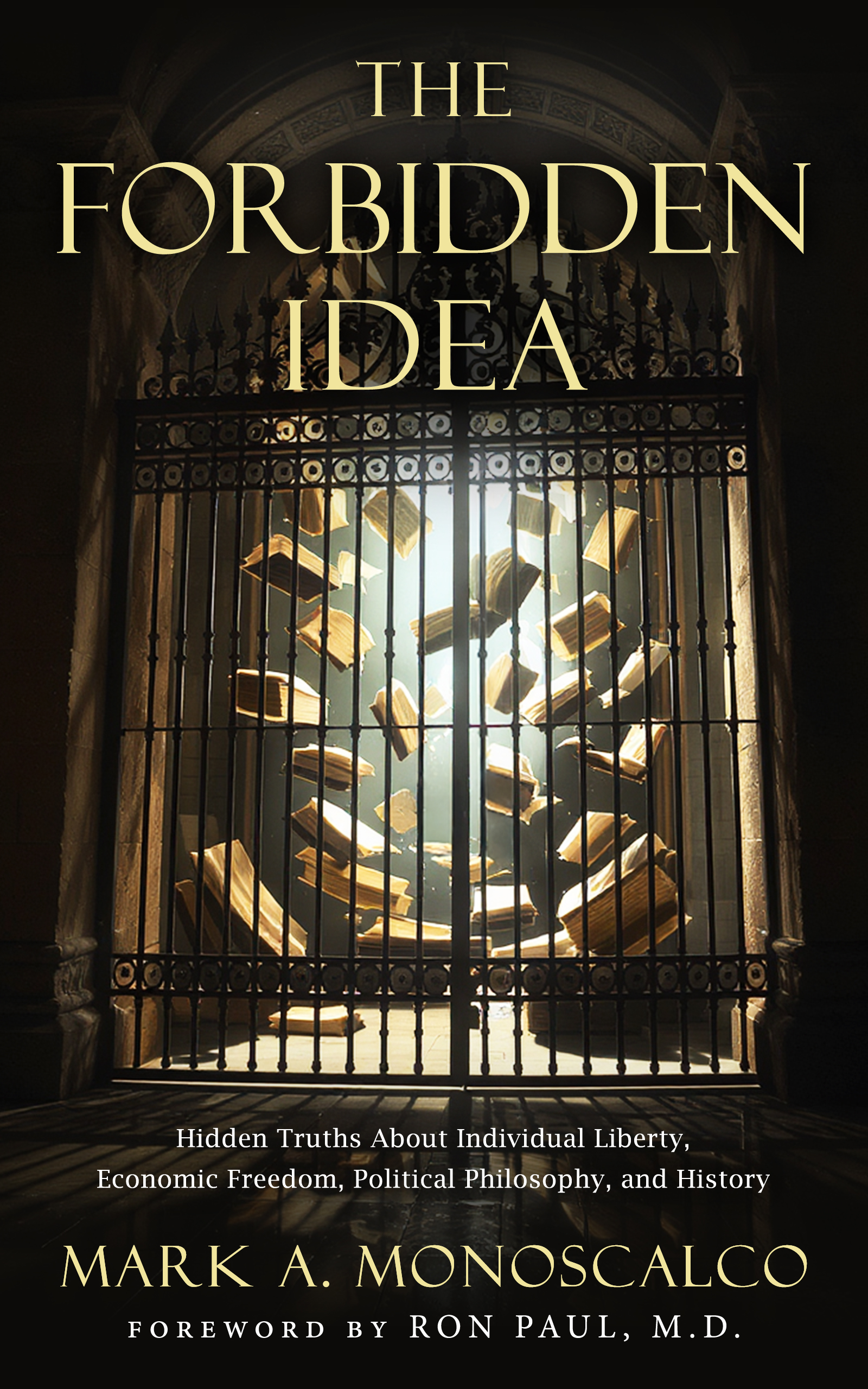
From Michael Nilan '66
After graduating from Campion in 1966, I attended the University of Minnesota (in part because it was the largest undergradutate enrollment in the country at the time). The classes at the U of MN were much easier than the Campion classes and ultimately I decided I didn’t really need to attend class (which turned out not to be true). As people will recall, the draft was converted into a lottery in late 1969 based upon date of birth. I was out to dinner with my girlfriend the night of the lottery and got back to the fraternity house to find out that they had created a pool for the lowest lottery number. Someone asked what my number was and (of course not starting at the very top), I said my birthday (Sept. 14th) had not been drawn. Someone said something to the effect of “ you dumb ass, you are number one”. Somehow the main news station in Minneapolis found me and I interviewed me on the 10:00pm news program and asked me what I thought of the selective service program and he war in Vietnam and, of course, I told them in very graphic terms what I thought of the selective service program and the war. Of course, I needed a deferment a few months later to attend graduate school and walked into the headquarters of the Minnesota Selective Service office and asked for a deferment. There were a couple of hardbitten Sargents behind the desk and one of them asked me if I had been on the WCCO station after the lottery complaining about the selective Service program and I said “yes, it was me but couldn’t they take a joke. They both laughed and gave me the deferment. I got a Master of Science in 1971 in Industrial Hygiene (a field I had never heard of before). Part of the program was sending industrial hygiene students to the annual National Industrial hygiene conference. At the conference, I struck up a conversation with two Navy Industrial Hygiene Officers and they asked me what I was going to do I the future. I told them that my lottery number was number one and it looked like I would be going into the army in a couple of months. They both said that I should apply for a direct commission as an industrial hygiene officer in the U. S. Navy. I went to a friend who was in a similar situation and told him that I had a new opportunity and we were going into the Navy. We ended up at the Navy Industrial Hygiene center in Cincinnati Ohio for the next three years. We flew to Navy bases and ships around the world to conduct industrial hygiene surveys. Ultimately, I got out of the Navy and the GI bill put me through law school and we formed a law firm in Minneapolis named Nilan Johnson Lewis, where I spent the rest of my career, retiring several year ago.
From Frank Foley '64
When the Jesuit priest came to the home of my youth, I knew I was in trouble. Father Frank Carey first came to the grade school and spoke to the all-male, eighth grade class about Campion. My only memory of his presentation … is something he said. His only inquiry among my classmates is that he asked my name, then he told me to wear my hat on the way home … “the squirrels are hungry, Foley!” Jovial, but a cut-down, as we used to say. I had taken the Jesuit aptitude test at St. Ignatius in Cleveland the prior week. Father Frank came to our home on a Saturday to tell my parents how poorly I had done on the exam. “His process is correct in math, but he loses focus and misses the simple conclusion of addition.” I knew at that statement, spoken to my parents, that I was being sent away to a boarding school. My father and my grandfather were both Jesuit-educated in Cleveland -- St. Ignatius High and college at John Carroll University. I had some inkling that I was “smart” but only because my best friend and I were standing at our eighth grade teacher’s desk. Tim saw on the teacher’s desk the results of an IQ test we had taken. His name was just above my name. I scored 20 points higher, he later told me. But my grades were terrible and erratic. The only consistency in my grades was in conduct – a string of quarterly recaps graded “F” for failure. It did not matter what subject, math or religion, spelling or history … from quarter to quarter, the grades were a zig-zag of “A” or “D.” No B nor a C. If class clown was being scored, it would have been a consistent “A.” If I am interested, I glue into what was offered. Otherwise, I am off as a dreamer. As a teacher presents instruction, my mind grabs onto an alternative thread that starts a side-show and arrives at foolish, quick humor, wanting to burst out and be free. Very disruptive and needy for attention is my summary. The teacher himself, a WW2 vet who served in supporting the transition of Japan’s government – he even laughed with the class … but invariably, I had earned from my outburst another paddle. Lean against the chalk tray and take it – the swing of a ½” 1-by-4 board … you deserved it. That experience served me later in tiring out Fr. James Vincent O”Connor, another WW2 vet. Cleveland had a Holy Cross boarding school, but in my imagination, my Dad colluded with one of his Jesuit, contemporary friends and asked, “Do you know of a Jesuit boarding school which is quite distant from Cleveland?” And the reply asked, “How far away, Frank?” My Dad replied, “Any school that would be far enough away that my son could not possibly even think that he could walk home.” And the name Campion came into my life, a school 700 miles away from home and away from everything and everyone that my young life held dear. I was dropped off in the cavernous Union Station in Cleveland, ticket in hand. My Dad said he and the family would wave at me from Belle Avenue as the train passed by. As the train began to pull away, the gray sky released its sorrow. A heavy rain obscured my train window --- and the train was moving far too fast to even get a sure sight of Belle Avenue. Impossible to sleep, throughout the night and into the following morning, I was alone with my thoughts about my past and flummoxed about everything unknown before me. I was told to ask in Chicago’s Union Station about “The Campion Special” to complete the travel. A few hundred boys rode that Burlington Zephyr. I knew no one and walked the train aisles, wide-eyed and wondering how I fit in. Many on the Campion Special knew each other – there were clusters of raucous laughter. I simply kept walking the aisles -- observing. And it was largely, cautiously … that way through the first weeks and months of school. The regimentation and schedules were ingrained by the third week. In classes, the clown was silent. There were three other students named Foley on the campus, and Jim Foley from Waukegan became the opening to break my caution. Gregarious and light-hearted, Jim was the beginning of relaxation within my own skin. At the 60th reunion of the Campion class of 1964 held in Milwaukee in September of 2024 … we were fortunate to have 42 classmates attend. We graduated with 111. The Chairman of the reunion event was Jerry Okane and he provided superb oversight to the occasion, helped by with his wife, Marjorie. I believe that one third of the class passed and roughly, a second third were unable to attend. I asked myself at that 60th reunion, “Why have our reunions since 2001 been so well connected and attended?” I came up with three fundamental reasons. First and foremost, our class had two guys, Pat Mower and Bob Lachance who, over the decades were instrumental, pre- and post the advent of the internet … to connect, maintain and publish data about our class members. Second, we were likely the only class that experienced an unusual event in our senior year -- the campus shut-down with all classes called off. Perhaps in the history of the high school dating back to 1925, a shutdown never occurred. In November of our senior year, President Kennedy’s assassination halted the regimen for four days. We had immense time and freedom of movement. We were seniors, based in Marquette Hall. There was a nineteen-inch, black-and-white television in the basement lounge of Marquette. The lounge had chairs and sofas enough to accommodate forty sitting, another thirty standing. We were free to wander in to watch the somber proceedings through the funeral. I thought at that very time that it was not hard to consider -- with all this somber quietude, we individually realized that within five or six months, we will graduate and we may end up not seeing each other for the rest of our lives. I noted that cliques broke down. Guys were sitting down at whatever space was made … talking with mates that they had not or very rarely engaged in the prior three and a half years. Discoveries of common grounds were established. A third reason for the tight comradery in our reunions is tied to this wonderful gift of aging … within the reflection that aging invites. Our youthful break-away from the family experience forced young boys to discover who they are in relation to each other. In close quarters for 220-odd days a year, we observed, we admired, we repelled, we appreciated the large swathe of personalities and many accomplished classmates. We were influenced in reaction to observations and encounters. In brief, our classmates in those formative years influenced the men we became, gaining insights into our own strengths and weaknesses. The eminent psychologist, Steven Pinker of Harvard in one of his early books called, The Blank Slate, cautions parents to carefully monitor their children between the ages of 11 and 17, the very period that individuals begin breaking away from family … and their peer relationships are becoming influential. Do you note a turn to the devious? Parents are compelled to pull a Jesuit trick -- break the relationship – nasty behavior is sent home. In a subtle way, we were mentors to our early selves. Now in our later years, many of us are gifted with the ability to look back and be filled with gratitude and joy for all of the many fine people in our lives and how they helped us along. Out of a trying challenge, all gratitude now is embedded and tapped for joy. Thank you Campion for many great guys and the dozens of blackrobed men who sacrificed their time and efforts on behalf of our development. All the best in spirits and in health.
From David Robbins '65
Life before-after CampionI was raised in an American copper mining camp in the world’s driest desert in northern Chile. My father was from Wisconsin and married my mother from Copiapó, Chile. One of the beauties of a small town is that adult friends of my parents were called “tios” and “tias” so I grew up respecting adults who loved me as if I was theirs and could punish me as well. We learned to make our own wagon from discarded lumber, ball bearings and rope. When Billy arrived back from the US with rubber tires for a wagon, he was the coolest kid in town. We played golf on cleared desert fairways and oiled sand greens with special rules allowing you to tee up every shot so as not to destroy gold clubs (wooden shaft clubs in some cases). I learned all about mining, explosives, metallurgy, smelting, and shipping rocks that had been converted to almost pure copper ingots from a father who was given the highest honor given to a foreigner – La Orden de Merito de Bernardo O’Higgins” for his work benefiting Chile. I was privileged to have been confirmed by the archbishop of Chile who later became a cardinal in the Vatican (Juan Franciso Fresno Larrain). Because of my fathers position I met and dined with three Presidents of Chile (Alessandri, Allende, Frei). Allende while campaigning for senator used to come to the back door of our home and when asked by my father “why” he replied “I cannot be seen entering a gringo’s house”. He was very charming and loved his scotch. Many people came to visit the most modern mine in Chile…so, I met several Russian and other foreign diplomats and dignitaries; the son of “Monty” Montgomery; and was invited to spend six days on the Chilean Naval Training Tall Ship “Buque Escuela Esmeralda” where I was allowed entry everywhere except the communications room and armory…oh, and only allowed to climb the masts two body lengths for photo opportunities. I started as a swabby scrubbing decks on hands and knees and returned as a First Lieutenant (his was the only uniform that fit me). I had a super blessed childhood. Most American children were sent abroad for secondary schooling and so…I went to Campion. My mother cherished every letter Campion forced us to write. I found them all after she died. Post Campion started at U of Wisconsin where my grades were not to my fathers liking so I was moved to Biscayne College in Florida (now St. Thomas University). While in Madison I was the date for Alexis Herman (who later became Secretary of Labor to Bill Clinton. I was also named Honorary Vice Consul from Costa Rica to Madison Wisconsin by a college roommate. The document helped me get into local bars. Later (I have since realized it was all God’s doing) this kid from a small mining town in northern Chile went through several states but ended up in Terre Haute, Indians where I met the special lady God chose for me to marry. Eventually I ended up working for John Deere (a worldwide Agricultural, Industrial, and Home Equipment manufacturer) headquartered in Moline, Illinois. My knowledge of several languages (French learned at Campion) gave me the opportunity to travel most of South America, Central America (Where twice I had a gun placed to my head – once in El Salvador and then in Guatemala); Asia: Australia; and Europe. The major areas missed were Africa (except Senegal); India; China and Russia. I was fortunate to become Born Again by the obedient help of a neighbor in the presence of my mother-in-law and have tried to live a life pleasing to God ever since. Together Hazel and I have 2 wonderful children and 3 delightful grandsons and a hard-working loving son-in-law. We live the retired life in Tucson, AZ with a 9000 ft Mount Lemon at our front door, “dry” heat and wonderful cuisine all around us. David A. Robins
From Anthony Valiulis '65
A Letter To My ClassmatesI’m an old man now, 79 last May. I assume you all (my Campion classmates) are the same age or within a year or two. So we have one, major thing in common: we are all facing Death. (I like to think of death as a real person, so I capitalized its name. I know, however, that death is really nothing, like what waits us when we draw our last breath.) For much of my post-Campion years, I practiced law. Now I am retired and doing not much of anything, some golf, a bit of writing, and playing with my grandchildren. (My wife did a year and a half ago.) As for my writing, I love to create flash fiction and have one story published. It’s called Done Is Done and can be found in the archives of Tales from the Moonlit Path. I also published a novel, Thy Gods Awaken, a fantasy. If you’re interested, you can find it on Amazon. I’ve been working on a sequel but doubt I’ll finish it. The inevitably of death is likely to interfere. I do think about my years at Campion, but my thoughts are quite different from most of yours, I think. I remember a repressive, authoritarian atmosphere run by a strange mix of Jesuits. A few were dedicated men who tried to teach us how to think. At least one was a brutal, perhaps sociopathic jerk. I do credit the Jesuits for one thing. I am a card-carrying atheist thanks, I believe, to them. For what it’s worth, I am also a former hippie and unabashed liberal who is not quite a socialist. My guess few of you feel the same. But that’s okay. The world is big enough for all of us. At least, it was. Not so sure now, for obvious reasons. Do you all remember our first year when we waited in bitter cold for the train to pick us up for the Christmas holidays? I do. As I stood in the snow, cold as shit (funny expression, since shit is not cold), I thought: Soon the train will be here and I’ll be able to get warm. Then the holidays will come. But that would end, too, and I’d be back at school, looking forward to graduation and college. College would lead to work and eventually retirement. That was my ultimate goal, until I realized that was what followed retirement. Let me leave you with a bit of poetry I wrote in first year, in Latin class, sitting behind Stacey. It’s not very good, but I like it anyway.
Youth much older Now the past, like a snake Or a lover hissing and writhing in my ear Whispers visions seldom heard And I see the sun set Even as it rises. May all of you live happily and fruitfully as we face…whatever we face.
From Paul McCullough '70
It Was No Duck Walk
It was no duck walk. At least at the beginning. Four years……..entered 153 out of 178 students, based on a series of tests taken during the 4 day 1966 Campion freshman orientation (including a bible history exam of Fr Aspenleiter’s……a challenge to a K through 8 grade public school kid whose only formal Catholic preparation was after school or Saturday morning religious instruction, basically to prepare for the required Sacraments). But since the old man did it Creighton Prep ‘35, and my older brother did it St Peter’s Prep ‘61 —— hey!, welcome to the party! During the required swimming clearance for entering students to use the Hoffman Hall pool - 4 freestyle laps of the pool’s length, then tread water for 15 minutes, I can still remember Mr Friend’s (CJHS swim coach) speaking to us 14 year olds: “I’ll teach you to swim. Hell, I don’t care if you’ve never been in a pool or lake in your life or just have been in a bath tub, I’ll teach you to swim”. God, such willingness to teach —— I only wished I took him up. I passed the screening, still recalling several buckets poolside readily available should students during/after the swimming test get sick to their stomachs. Sunday evening, at the end of the frosh orientation, Fr Doran, after explaining how class assignments were divvied out (all based on “the rank”) said our class postings for freshman year were on lists scotched-taped to the wall just outside the Campion Hall freshman study hall. In the press of students straining to see where they had landed, I looked for my name on the 1A list (the best of the best)…..nope; moving down the hall was the 1B list, not there either; 1C……not there as well; 1D…..nada; 1E…..well, whadya know. There was even a 1F class…….really??? - how in the world are you going to bolster the academic confidence of a 13-14 year old boy dumped in a class labeled 1F??? Talk about “Get Tough or Die”. I went down to the frosh rec room that night, just deflated, the orange Wurlitzer juke box likely belting out “Nowhere Man” by The Beatles. But, there was no time to feel sorry for oneself. The next day, Class 1E, I started my Campion career……Mr Mugan SJ’s class in freshman Latin. My freshman year at CJHS was one of the worst years of my life; in May 1967 I ranked something like 140 out of 170. (Attrition had already started during the ‘66 frosh orientation; there was one entrant, Marquette Hall first floor, who sobbed all the time since arrival so that by the third day of orientation, the Jesuits requested his parents take him home.) Things got so bad that I was memorizing the times of the trains going to Chicago, could even tell when they were running late based on when they roared by campus. I can still remember watching The North Coast Limited/Empire Builder sail past Campion Hall 10:15 am while in algebra class. I was lucky there was no smoking my frosh year, chewed gum instead - Wrigley’s Juicy Fruit and Doublemint….boxes of it. (The 67 Knight has a picture of me at mail call with a big wad in my left cheek). Regarding Campion’s strict behavior rules, I toed the line really early after my parents, on a weekend visit October 1966, dropped me off at Kostka Hall after a Sunday breakfast in town, 15 minutes late for morning study hall. Brother Daley hauled me and my father into his office and both of us standing in front of him, gave us a lecture on the importance of being on time/obeying the rules, literally dismissed my father from the room without a goodbye - Dad left the office, got in the car for home, leaving me alone. Bro. D then gave me a jug, and demanded I write a 4 page paper on the importance of being on time, due in 48 hours. After that, reflecting on turning in the paper and recalling my father being dismissed as had happened, I was like…….later with all this stuff/if you want obedience, Baby, you got it!!!….I swore from then on I’d never again put myself in a position of being squared off against a Jesuit, adopting a manner of keeping some distance with politeness, giving them all a wide birth and subsequently getting something like 3-4 jugs/demerits for the rest of the four years there. It wasn’t really fear - maybe because I was up to that time a public school kid and had not encountered such a hissy fit episode from a cleric before, I just wasn’t going to be bothered with the discipline crap. So much for Kumbaya. Campion classmates remember me because I played the electric bass (i.e., the bass guitar). Freshman year, I used to closet myself in the storage rooms of the frosh gym, practicing, enjoying some creative time alone. It was only after returning home in May 1967 that I discovered that I was functioning with a serious impediment while a CJHS freshman - I was severely nearsighted, figuratively as blind as a bat: 20/200 without correction…..that’s the big E at the top of the eye chart. Kinda tough reading Fr A’s religion notes off the blackboard, or following Mr. Friedrichs solving an algebra problem line by line. Unable to clearly see, one lost interest in what was being taught real fast. My very anemic class performance seemed to further tank the farther back in the classroom I was seated when students were transferred between classes during freshman year at the end of grading periods - (I sure missed the bus on promotions out of IE, that’s for sure!). Reviewing application documents many years later, it appears that at the time of my admission, Campion was not very stringent on screening for visual acuity for new students and thus, I was missed. Rather surprising that during the academic year, particularly for students who were marginal or were not progressing that eye screening was not offered, the more so when myopia (nearsightedness) is likely to develop during pre-adolescence and adolescence. It makes one wonder how many other low ranking frosh at the time were in the same predicament. With a set of eyeglasses, everything changed. I spent the rest of the 1967 summer caddying at Inverness Golf Club, Palatine IL……never lost a ball in the rough and netted about $600-700 that season….big money back then. That summer, my future Campion career was very very much up in the air, but in early August 1967, standing at a window looking out at my parents’ back yard, able to see, I thought: you know, I can do this - I’m as smart as anybody else…….I’m going back to Prairie du Chien. So my performance and grades improved. On entering and passing through 2D, my grades were so high that in two courses, because Campion used a curve in grading, math and Spanish - especially in math - my marks were lowered (for example, 90 instead of 92 in geometry, to fit the curve). I can still recall being called in by Mr Vacek S.J., rather apologetically, to tell be I should not expect a 92 for my second semester geometry grade. I started getting razzed, classmates would glare at me after a test or quiz, or asked “What did McCullough make?” I kept quiet and minded my own business, considering crawling under the desk. I finally ended up in 4B, probably because my cumulative rank at the end of junior year was higher than 30, not quite A Class range (1 - 30), the result of my disastrous scholastic performance freshman year. Much as I had wanted to be one on one with Downs, Kraus, Lamal, O’Brien, Scheck, Wiley and Wood, it just wasn’t going to happen. Academically, the class rank was, in my opinion, almost everything at Campion. As I recall during 1966-1970, a student’s cumulative rank, the one that counted, was determined by the semester grades (0 to 100) of five courses in the following areas: English, Mathematics, Language, Science, and Religion. Other courses such as speech, ROTC (you could be Douglas MacArthur and it didn’t matter rank-wise) were not used. The sum of each student’s semester grades (top score: 500, that being a perfect score (100) on all 5 counted courses) was tallied and then each student was ranked accordingly. For the final 4 year rank, the sum of all 8 semester values were taken, summed, and again, ranked accordingly. Current ranks were also recorded each academic quarter; short term, this made you feel good if you had a good quarter. But, overall, it was the cumulative rank that was important, and if you turned in a lousy academic performance early in your Campion career (as I had frosh year due to severe nearsightedness), it would impact one’s final rank upon leaving the school. I was aware of this and frankly worked my ass off sophomore to senior year to improve my standing……practically living the life of a monk junior year. Bottom line: I left 20th out of 120 students who graduated in 1970. My biggest regret is that my pursuit to improve my academic standing did not allow much time for other pursuits…..sports, music, and frankly, probably most importantly……just learning how to hang with others. Campion did its job as a prep school. Rice, Johns Hopkins Medical, Columbia School of Public Health followed. If anybody told me back in November-December 1966 (academic black hole) I’d be going to these places, I’d say, “you’re nuts”. I became a fanatic about children - especially entering middle and high school - getting eyesight screening to find and correct any refractive error. I passed the swimming test 4 years later in college, the test being a requirement to graduate, pretty much the same as Campion’s. And I still play the bass. So….., prior to entering school, get your children, grandchildren or great grandchildren eye tested, please.
From Joe Williamson '72
Campion MemoriesMy fellow classmate from the Campion Class of 1972, Tom Olson, asked me to write something about my time at Campion as he was short on articles. I agreed to put some thoughts down and then I had to ask myself, where do I begin? Let’s begin by asking the question, ‘How did I end up going to Campion’?. The answer is that my dad, James Williamson, took a test, as an 8th grader, at his grade school, St. Therese catholic school, in Appleton, Wisconsin. This test was provided by the Campion Mothers Club, of Appleton, Wisconsin, and the winner would be provided free tuition and room and board for the entire 4 years. He ended up winning the test and off he went the following school year! My dad thought Campion was one of the great experiences of his life, and he wanted to provide the same experience to my older brother, Jim, and me! My parents always reminded us that, to send us to Campion was a big sacrifice for them. We didn’t come from a wealthy family, although my dad was a successful attorney. I never forgot that! I didn’t want to go to Campion, but my parents told me I had to go my freshman year and, if I didn’t like it, I could switch to our local Catholic High School, which was Oshkosh Lourdes. This is where all of my buddies went and I had a lot of friends there. I was lucky enough to have my older brother, Jim, from class of 1970, there when I started. This was comforting to a little freshman whose parents were a couple hundred miles away. He didn’t have that same luxury when he was as freshman. My freshman year (1968/69) was the first year that ROTC was optional, but you needed the parents to sign off on a permission card.I didn’t want to join the ROTC program as I remembered the TV show, Gomer Pyle USMC, where Sgt. Carter would scream at him! That, and having to polish shoes and brass made it an easy decision! I remember presenting the card to Sargent Patnode and he was not happy! Kind of intimidating for a little freshman! I quickly made friends with Mike O’Malley, Chuck Ritter, Dan Lipke, Tim Dickey and Bill Small. All great guys who I had a lot of fun with. My memories mostly evolve around sports as I played football, basketball and baseball, which were a blast! I also remembering winning the Campion talent contest as I lipped sank ‘Surfing Bird’ with the help of Mike O’Malley, Doug Reichl, Dan McKeown and one more who I can’t place. What fun! The Jebbies ran a tight ship my freshman year as we had haircut permits every few weeks by good ol’ Don Sabatian, strict dress code, and many demerits, and confined to campus. Over time, Campion loosened up on the rules, got rid of ROTC and kind of threw the rule book out the window. I believe this was the beginning of the end as a few short years later Campion closed. I remember sophomore year my roommate, Mike O’Malley, and I used to give the men who used to come and fill the candy machines a bunch of crap and yell at them. We used to call them the ‘Candy Twins’ as they were both dressed in the same uniforms. Our room faced the back, where they parked their vehicles, so it was hard to resist. Everybody who had rooms facing the back seemed to enjoy our antics! Our room was directly across the hall from Fr. O’Connor and was referred to as ‘the problem suite’, where they would put the troublemakers. I guess we qualified! Looking back, I wouldn’t trade the experience for anything and have many lifelong friends which remain today. I also worked with the Bergstrom family for many years which was a result of knowing them from Campion. So sad to have the place close down just short of 100 years. 1880-1975. Now we wonder, who will be the last man standing?? Joe
From Bert Atkinson '74
FIRST FEW WEEKSLate August, early September, 1970. The day was cool, and muffled in a low overcast. The motto: “Give Campion a Boy and Get Back a Man” was in my mind. There is a photograph of me with my mother standing in front of Marquette Hall. Her hair is wrapped in a scarf, she has on a light weight, navy blue rain coat reaching down mid-calf. She wears cat glasses and smiles at the camera. Her hand is on my shoulder. At a petit 4’11” she is taller than me. I have the rumpled look of a boy younger than his years, whose clothes don’t quite fit and is in eternal need of a haircut. I look expectant, not smiling. My mother had me late in life. On that September day she was a few months past her 61st birthday. My father was ten years older than her. He died when I was four. They were both the children of Irish immigrants. Most everyone I knew was the either the child or grandchild of immigrants. After the photo, my mother got into the avocado green, ’64 Buick Le Sabre and drove off toward Chicago. I watched her drive away under the tall pine trees that lined the road. As she turned left in front of the Freshman gym, a pain welled up in my chest and tears burned my cheeks. I knew my mother loved me. I didn’t have any brothers and sisters. I saw the sacrifices she made as a single mother. I knew it was for me. What I didn’t understand until later, was how her love could lead to a decision of separation in the hopes of a life for me, free from the poverty she had grown up with. What I did understand is that I felt just like I did when my father died. A deep emptiness. Across the quadrangle other boys were saying good-bye to their parents. Cars were leaving. “It can’t be that bad,” I thought. Other boys were being left as well. I remembered the beginning of Call Of The Wild. The dogs that showed weakness were killed in fights with the other dogs. Stop crying. I have to fit in. I wiped the tears on the sleeve of my jean jacket and forced the darkness in my chest lower down. The pain in my throat ached, bad. I swallowed, once, twice. The pain became controllable. As my mother's car disappeared by the Dining Hall, I realized I was now on my own. All on my own. Maybe it was a decision. I turned and walked up the broad staircase and into Marquette Hall. The first week felt like a month. So much new. Stern Priests. Study hall. Schedules. Demerits. Scowling Upperclassmen. The Dinning Hall with an edgy buzz. Half day on Saturday. Intramural sports. Freshman segregation. Five O’Clock Mass, in a circle!!! Pebbled glass on the doors. Transoms. Lights out. I worried about fitting in. Standing out. Being liked. Being accepted. There were all kinds of guys. Big guys, skinny guys. Italians, Germans, Blacks, Poles, Irish, Asian, and combinations there of. I felt different and isolated. Even though I was never alone. One night I found myself at the center of the social scene in Prairie du Chien, the Dairy Queen. Must have been a Saturday night, because I don’t think we were allowed off campus except on weekends. I sat on the red painted picnic table watching the desiccated bodies of bugs fall from the glare of the yellow bug zapper. There were maybe 5 or 6 of us. I can’t remember now who was there. Dan Casey, Frank Abderholden, maybe EJ Sherlock. A couple of others. Someone ordered fries. I was jealous. I couldn’t afford fries. I got a small slushie, that was too cold, and too sweet. Some of the guys got to talking to some girls and they invited us over to their house. This was a new adventure. Prairie du Chien was unlike Chicago. Streets were mostly empty of cars and the street lights were few and far between. The light that was available seeped out of the low slung, ranch style homes. Near the homes the air was moist with a hint of wet grass. The streets here lacked sidewalks and as we continued walking, a farmer’s field open on the right, broad and dark, smelling of rich earth and corn husks. Nothing like the factories of my neighborhood. The farmers field was soon replaced by a block of homes. We followed the girls up a driveway and into a back door. We entered what was probably a family room. Linoleum floor, low profile furniture, a pole lamp provided illumination. I wondered if this would turn into a make-out party. How would that work with more guys than girls. One of the girls put on the Beatles White Album and we started dancing. There were smiles. About the time Sexy Sadie was ending the door flew open and a bunch of guys came in. They were Townies. Locals. Big. Older. Athletic. We had all been warned by upperclassmen of the Townies also known as Bombers. Bombers because of the rounded, 50’s era cars they drove resembled WWII bombers. Or maybe it was because their punches felt like a bomb going off. “Hey! Do we have a party going on here?” crowed one. In the gap between songs the mood changed. The girls looked sullen. I felt my stomach drop with opening guitar riffs of Helter Skelter. The Campion guys were quickly exchanging looks with each other. I think a few of our guys were getting jostled around a bit. One big, blonde guy, with a stubble of beard growth, picked me out from across the room and sauntered over. He was shaking his right hand like it held dice. “Hey. Are you a Hippie, man? Do you do drugs?” Panicked, I shook my head. “I got some pills,” he said, as he shook his fist in my face. “Wanna try some?” “Ahhh. No man. I’m cool. No thanks,” I replied, I did not feel cool at all. “Are you sure? They’re free.” Big leer. He kept shaking his hand. I could hear something knocking together in that big fist. “Uh, uh.” Is all I could manage. Long pause. Then, “Hahahahaha,” he guffawed. “There only M&Ms!” He laughed and punched me in the shoulder a little hard. Somebody said, “We should get back to school before curfew.” As I slid out the door, I heard of the Townies say, “Don’t go. The party’s just starting.” Followed by deep laughter. The screen door slammed behind us like a starter’s pistol and we walked as fast as we could. I don’t know about the other guys, I felt like running. But no one did. We crossed Highway 18 a few blocks down from the Dairy Queen and walked along the railroad tracks. Up ahead by the Old School House, a 1950’s car turned on the Highway and drove slowly toward us. As it drove past us it sped up going towards town. We were all on edge and talked in hushed voices. Behind us, two cars turned onto the Highway in our direction. The lead car was the one we saw heading to town. There other car followed it closely. We were still about a block from Lil” IGA when they stopped and doors opened. “Hey! We wanna talk to you.” I was a bit in the lead of everyone. But I could hear the slap of a punch hitting someone’s face. Voices rose. I can’t remember who was yelling to stop. Probably more than one person. Dan Casey was near me. He said, “Run! Get help!” Sometimes it pays to be the smallest. People over look you. I slid into the drainage ditch that paralleled the train tracks and ran. By the time I got the Power Plant, I was getting a stitch. I passed the tennis courts by the Freshman Gym. It seemed to take a long time. When I got to the Chapel, I could see the lights on in Marquette Hall. I could hear music and voices drifting from the open windows. I started yelling, “Bombers! Bombers!” Someone in the building yelled “Where?!” “Train tracks, by the Dairy Queen!” I yelled as I entered the building. I ran up the marbled hall of One North banging on doors and yelling. Phil Bertucci and Pat Devany left their rooms and ran outside. I pounded on a couple of more doors yelling and then turned to go back outside. Guys were streaming through the hall heading through the double doors. I was about to join them when Mr. Winzenberg, the Dean of our Hall, stepped out from his door and grabbed me. “Stop! What’re you doing,” he demanded. “Prairie Bombers jumped us.” He said something to the effect of, “You can’t go out there. Stay here.” I saw Al Komorowski run behind him holding a baseball bat. I said, “I’m not gonna stand here and let them get their asses kicked!” I pulled away from him and ran out. As I ran across the campus with a group of guys, I could see the outlines of heads bobbing in front of me. There were other guys behind us. When we got the Power Plant, I could see a small group by the tracks back lit by the light from Lil’ IGA and the DQ. Before I got to them, I heard car doors slam and the Bombers drove off. I don’t know if they got hurt or not. The next morning, entering the Dinning Hall, I felt different. The room didn’t seem quite so intimidating. The noise seemed a friendly hum, rather than an edgy buzz. I got a few acknowledgements that morning. I also got a couple of hours of detention from Mr. Winzenberg. I don’t remember all the guys involved. Maybe someone reading this was there or knew who was there. I’d be interested in hearing your memories of that night. Bert Atkinson Class of '74
From Dan Fitzgerald '60
CJHS StoryIn September 1956, Kit Libby (’60) and I boarded the Northern Pacific Railroad’s North Coast Limited in Livingston, Montana eastbound. It was about noon and the Montana leaves were already turning. We were bound for a place neither of us had ever seen, a town in Wisconsin with a French name and a school called Campion. The big diesel started us out slowly, but soon we were clicking along at 60-70mph, through Big Timber, Columbus, Billings, Miles City, Glendive, and Sidney - - the dull, flat part of the Yellowstone Valley where the river only holds carp and suckers (no rainbow trout). Then, after the sun had set, we continued on into the black North Dakota night. And on. And on. Finally, we slowed down in the rail yards of Minneapolis to change engines from the NP to the Burlington Northern, lots of car bumping and slow. Onward once again down the Mississippi Valley while eating a breakfast of French toast and boysenberry syrup with sides of crisp bacon. It turned out to be the best meal we’d have until Christmas. After a medium while, the train began to slow down for its stop in Prairie du Chien, a place it only serviced for the occasional passengers. We tipped the porter and got off. I don’t remember how we got to the school, must have been by taxi. I was a little overwhelmed by the big buildings on a real campus. Wow. Somebody must have pointed us to the stairs to Koska Hall, and then up to the freshman dorm where we dropped our luggage in small alcoves with only a curtain, not a door. Then we tripped down the three flights and went out front. There we saw the Campion Special train disgorging hundreds of students. It was like the lonely campus just came alive. After an hour or so a little kid, might have been Ken Duffy no bigger than me, led us over to the Lawler rec room where Fr. Aspenleiter was watching out for the newbies. Saw two pool tables, a billiard table and the ‘shack’ where cues and supplies were. ‘Great,” I thought, I can probably play pool.” Turns out I spent my few free hours there trying to learn the game of nine-ball. Some later in the fall, there was a pool tournament and I won a couple of games to advance, where Robert Neumaier awaited. Though not tall he was a heck of an athlete, gifted on the football field and basketball court. Well, the day of the finals came and he won the break, sank a few more balls, and didn’t miss until I was well behind. Then the bell rang for us to go to study hall and Mr. Ahler said we’d have to start again the next day. He ran us out of Lawler. Bobby N. was miffed; he’d been well ahead. The next day was full of luck for me and I just got past Bobby. And he was still miffed. Somehow the months passed and Kit and I trained back to Livingston. We were met by both sets of parents and got in our cars to go home. The first thing my Dad asked me was, “Well, what did you learn at that Jesuit school?” And at that point I hauled out my pool trophy.
From the desk of John Duskey '63
Proposal for All Class Oldtimer Reunion 2028 near Major AirportThe year 2028 is approaching and I have been thinking about what kind of a reunion we might have for the 65th anniversary of our graduation from Campion. Between meetings and phone conversations it is apparent that we are facing a situation different from what we have had for the past several years. There are fewer of us now, and travel is more difficult for those of us who survive. Taking into consideration that other classes might have similar questions about their own plans, we came up with the following suggestion: sometime in the summer of 2028, we could have a reunion to which all alumni would be invited. A larger crowd would make for a more enjoyable event, but careful planning would be necessary. This would require active cooperation from the contact person, the lead person in each class that chooses to participate. That is the person, in each class, who would promote the reunion, encourage people to come, and keep track of all the numbers. These contact persons would become a committee, who would make the decisions on hotel, dining schedule, and other provisions such as activities and entertainment. I have some suggestions. 1. It would be on a weekend during the summer, but not in early June because that is the time of the all class reunion and golf outing in Prairie du Chien. It would probably start on a Friday around noon and end after a Sunday noontime brunch. 2. We would want to have a common banquet on Saturday evening for everyone in attendance. 3. It should be in a metro-area with good airplane service, and the hotel should have a regular bus service to and from the airport. We don’t need to rent cars, find parking, etc., unless some individuals really want that. This is important, especially for those of us who are over 80 years of age. 4. The hotel must have a suitable hospitality room for all of us to gather any time during the reunion. Those in attendance would each be responsible for their own hotel expense.
|
|
|
|
|
|

 Obituaries: